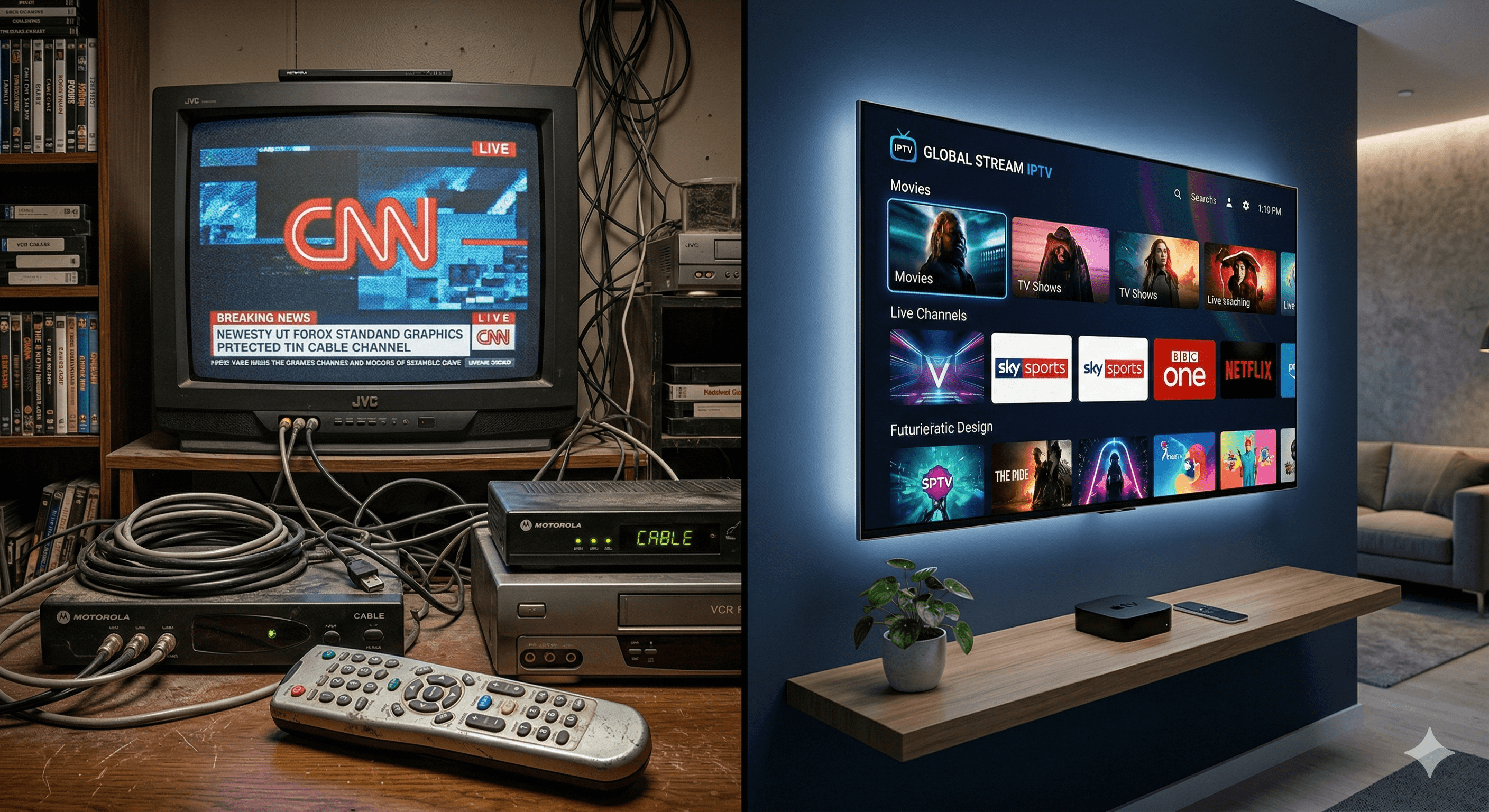
IPTV vs Cable TV: A Complete Comparison for 2026
The debate between IPTV vs cable TV has never been more relevant. With the cost of traditional cable rising every year and streaming technology improving rapidly, millions of households are making the switch. But which is actually better for you?
This guide compares both options across every dimension that matters — price, picture quality, channel count, device support, and reliability — so you can make a confident decision.
What Is IPTV?
IPTV (Internet Protocol Television) delivers TV channels over your internet connection instead of through a coaxial cable or satellite dish. Your channels are streamed in real time from servers, just like Netflix — but for live TV.
A good IPTV service gives you:
- 1000+ live channels including sports, news, and entertainment
- HD and 4K quality streams
- VOD library with movies and series on demand
- EPG guide so you can see what's on now and next
- Any device — TV, phone, tablet, laptop, Fire Stick
What Is Cable TV?
Cable TV delivers channels through a physical coaxial cable to a set-top box provided by your telecom provider. Channels are broadcast continuously and you tune in to a frequency for each channel.
Traditional cable TV includes:
- A fixed bundle of channels (usually 100–300)
- Rental cost for the set-top box
- Long-term contracts (typically 12–24 months)
- Limited on-demand content
- HD channels (4K is rare without a premium tier)
Head-to-Head Comparison
Price
| | IPTV | Cable TV | |--|------|---------| | Monthly cost | $10–$20 | $60–$120+ | | Installation fee | $0 | $50–$100 | | Equipment rental | $0 | $10–$20/month | | Contract | None | 12–24 months | | Annual cost | ~$120–$240 | ~$840–$1,680 |
Winner: IPTV — typically 5–8× cheaper than cable with no contracts.
Channel Count
A standard cable package offers 100–200 channels depending on your tier. Premium tiers push this to 300+, but at significantly higher cost.
IPTV services typically offer 1,000+ channels including international channels, regional sports networks, and niche categories that cable simply doesn't carry.
Winner: IPTV — more channels, more variety, lower cost.
Picture Quality
Cable TV delivers reliable HD (720p/1080i) on most channels. True 1080p and 4K are available on premium tiers for sports and select content.
IPTV quality depends on your internet speed:
- 10 Mbps → stable HD (720p/1080p)
- 25 Mbps → reliable Full HD
- 50 Mbps+ → 4K streams with no buffering
With a fast connection, IPTV quality matches or exceeds cable. With a slow connection, you may see occasional buffering.
Winner: Tie — cable is more consistent; IPTV is better when your internet is fast.
Reliability
Cable TV reliability is generally high — outages are rare and usually related to physical infrastructure issues. Heavy rain or damaged lines can cause disruption.
IPTV reliability depends on:
- Your internet connection — fiber or fast broadband gives rock-solid IPTV
- The IPTV provider's uptime — quality providers guarantee 99.9% uptime
- Server capacity — especially during major live sports events
Winner: Cable TV — slightly more consistent for live events, though good IPTV comes very close.
Flexibility and Devices
Cable TV is tied to the rooms where you have a set-top box. Moving it requires an engineer visit. Watching on your phone requires a separate streaming app and often an extra fee.
IPTV works on:
- Smart TVs, Android TV, Apple TV
- Fire TV Stick and Chromecast
- iPhone and Android phones
- Tablets and laptops
- Up to 5 simultaneous devices (depending on plan)
Winner: IPTV — watch anywhere, on any device, at the same time.
Setup and Installation
Cable TV requires a scheduled engineer visit, equipment installation, and a wait of days or weeks before you're live.
IPTV is instant:
- Subscribe online
- Receive your credentials immediately
- Install the app on your device
- Enter your details and start streaming
Total setup time: under 5 minutes.
Winner: IPTV — no engineer, no wait, no fuss.
Who Should Keep Cable TV?
Cable TV still makes sense if:
- Your internet connection is slow or unreliable (under 10 Mbps)
- You live in a rural area with limited broadband
- You need guaranteed signal for a specific local channel
- Your household is not comfortable with apps and streaming tech
Who Should Switch to IPTV?
IPTV is the better choice if:
- You want to save $600–$1,200+ per year
- You have a broadband or fiber connection (25 Mbps+)
- You want more channels and on-demand content
- You watch TV on multiple devices or in multiple rooms
- You want no contracts and month-to-month flexibility
The Verdict
In the IPTV vs cable TV debate, IPTV wins on price, flexibility, channel count, and setup simplicity. Cable TV still edges ahead on raw reliability — but the gap is closing fast as internet infrastructure improves.
For most households with a decent internet connection, switching to IPTV saves hundreds of dollars a year with zero sacrifice in viewing experience.
See our IPTV packages — starting from just a few dollars per month, instant activation, no contract.
Share this article